

Have you ever sat down to draw a person and suddenly thought, “Wait… how do arms even work?” Don’t worry, you’re not alone! Figuring out drawing poses can feel tricky at first, but once you loosen up and play around a bit, it becomes one of the most fun parts of sketching. Whether you’re doodling in your notebook, planning a character for your story, or just want to practice body proportions, exploring poses helps your art feel alive and full of personality.
The best part? You don’t need fancy tools or years of anatomy study to get started. All you need is a pencil, paper, and a sense of curiosity. In this list, you’ll find easy, beginner-friendly drawing pose ideas that are fun, expressive, and simple to try. So, grab your sketchbook and let’s bring your characters to life!
Key Takeaways
- Simple pose sketches help you practice anatomy and flow without pressure.
- Everyday actions (like sitting, stretching, or laughing) make great practice.
- Try drawing stick figures first, then build on top with light shapes.
- The more you experiment, the more natural your poses will feel.
- Have fun these aren’t about perfection, but expression!
#1: The Classic Standing Pose
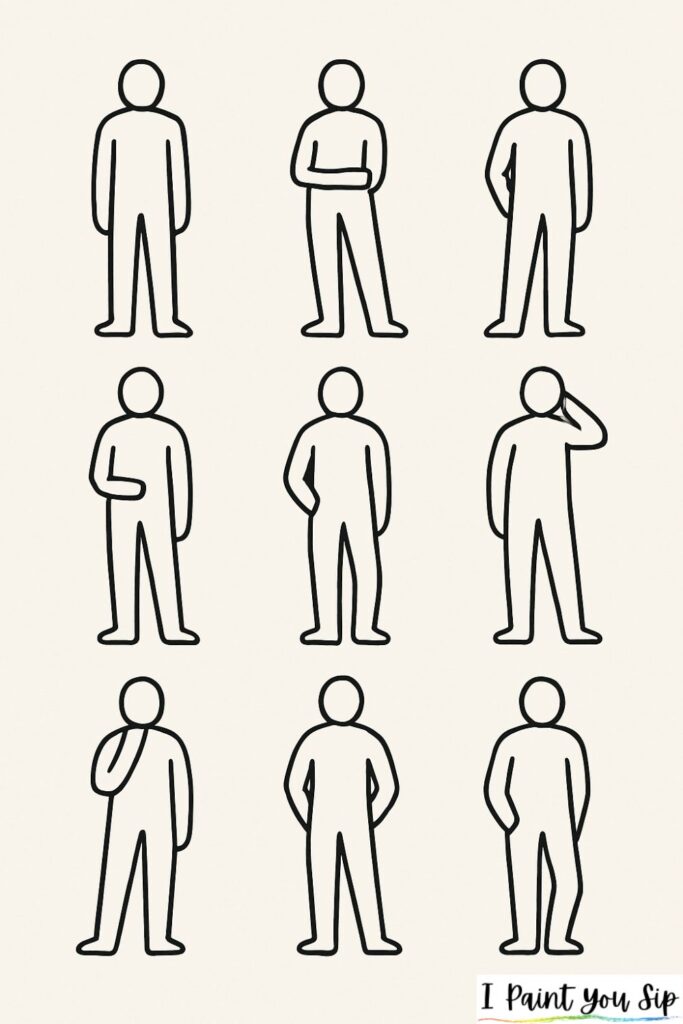
Start with a relaxed, straight pose like someone just waiting in line or chatting with a friend. Keep the weight on one leg so it looks natural. Focus on gentle curves in the spine and hips instead of rigid lines.
Pro Tip: Draw a light line of balance through the center of the body, it helps keep your proportions steady.
#2: The Sitting Cross-Legged Pose

This one’s cozy and beginner-friendly. Imagine someone sitting on the floor, relaxed, legs crossed. Use simple oval shapes for the knees and soft curves for the arms resting on the legs. I love this pose for sketchbook journaling it always feels peaceful.
#3: The Reaching-Up Pose

Draw a figure stretching toward something a star, a shelf, or the sky. It’s perfect for practicing arm length and movement. Start with a stick figure, then build in shapes. Don’t worry if the arms look uneven at first; that’s part of learning proportion!
#4: The Walking Pose

A walking pose adds instant energy. Tilt the shoulders and hips slightly in opposite directions, it makes the movement look real. Start with one leg stepping forward and one behind, then let the arms swing naturally.
Pro Tip: Watch yourself walk in a mirror or a short video for inspiration!
#5: The Laughing Pose

This one’s pure joy! Imagine someone laughing with their shoulders slightly raised and their head tilted back. A few curved lines can capture the whole feeling. Keep it light and playful, express emotion first, details later.
#6: The Leaning Pose

Have your figure lean against a wall, table, or tree. It’s great for learning weight distribution. Focus on how the shoulders and hips angle slightly toward the support.
Bonus: This pose works beautifully for casual characters!
#7: The Running Pose

Running looks dynamic and bold, but it’s easier than it seems. Picture a stick figure with one arm forward and the opposite leg stretched back. Then fill in shapes for muscles and clothing. You can exaggerate motion for extra fun, it’s all about rhythm.
#8: The Jumping Pose

Draw someone leaping in the air, arms and legs spread wide. This pose is full of energy and helps you practice body balance. Try sketching it quickly without overthinking lines, it keeps the motion feeling free and spontaneous.
#9: The Looking-Over-Shoulder Pose

Turn your character’s head slightly to one side, it instantly adds mystery! Use a gentle S-curve for the neck and back to make it natural. This one’s perfect for portraits or comic scenes.
#10: The Lying-Down Pose

Imagine someone daydreaming on the grass or resting on a couch. Start with a simple shape for the body line (horizontal this time) and add relaxed limbs. Keep the curves soft gravity does the work for you.
#11: The Holding-Something Pose

Whether it’s a cup, a flower, or a pet, adding an object brings life to your sketch. Start with the hands (loosely!) and build the arms around the object. It’s great for practicing natural positioning.
#12: The Dancing Pose

Let your lines flow here, no stiffness allowed! Capture motion by using sweeping strokes for arms and legs. You can look up reference photos or even dance a little yourself to feel the movement.
#13: The Reading Pose

This one’s calm and introspective. Picture someone sitting or lying down with a book. Add a gentle bend to the spine and relaxed hands holding the pages. It’s also great practice for clothing folds.
#14: The Stretching Pose

Try someone stretching after a nap or yoga session. The trick is long, flowing lines that show tension and release.
Pro Tip: Exaggerate just a little, it helps convey movement better!
#15: The Hug Pose

Two figures hugging can teach you a lot about overlapping forms. Start with rough shapes for both bodies and then connect them with curved lines. Don’t chase perfection, aim for warmth and closeness.
#16: The Thinking Pose

Head tilted down, one hand under the chin it’s thoughtful and classic. You can make this as simple or detailed as you like. It’s perfect for sketching moods or storytelling scenes.
#17: The Waving Pose

A friendly, simple finish! One arm up, a big smile (if you want), and relaxed body posture. It’s a lighthearted way to practice arm angles and expressions, plus who doesn’t love a cheerful wave?
Conclusion
And there you have it, 17 fun drawing pose ideas to help you loosen up, learn, and most importantly, enjoy drawing people. Remember, every artist starts with wonky proportions and awkward sketches (I sure did!). The secret is to keep practicing with curiosity, not judgment.
Try a few poses each day, or mix and match them into small comic scenes. If one doesn’t turn out how you hoped, smile and move to the next page, each attempt teaches your hand something new.
Once you’re comfortable, explore poses from photos, mirror studies, or even friends. And above all, remember this: creativity belongs to everyone. You don’t need to be perfect, you just need to start.

Jessie has a passion for bringing people together through creativity and socializing. She has organized many painting events that have left guests with lasting memories and new friendships. She’s also been to various sip events to unleash her own creativity and connect with like-minded individuals.