

Have you ever wanted to draw something realistic like a portrait, an animal, or a building, but didn’t know where to start? The grid drawing method is your secret helper.
It breaks down a complicated picture into smaller, easy-to-manage squares so you can focus on one little part at a time. It’s kind of like putting together a puzzle, piece by piece, it all comes together beautifully.
Even better? You don’t need fancy tools. A pencil, ruler, eraser, and paper are all it takes. Whether you’re brand new to art or just want to sharpen your observation skills, grid drawing helps you slow down, see details you’d normally miss, and gain confidence in your accuracy.
Ready to explore some creative ways to use grids? Let’s dive into 19 fun, simple ideas that’ll get you sketching in no time.
Key Takeaways
- The grid method makes complex drawings easier by breaking them into smaller sections.
- You can use it for portraits, still life, nature, or even abstract art.
- It improves observation, proportion, and patience.
- You can make grids by hand or use digital tools, both work great.
- Most importantly: focus on progress, not perfection.
#1: Favorite Animal Portrait
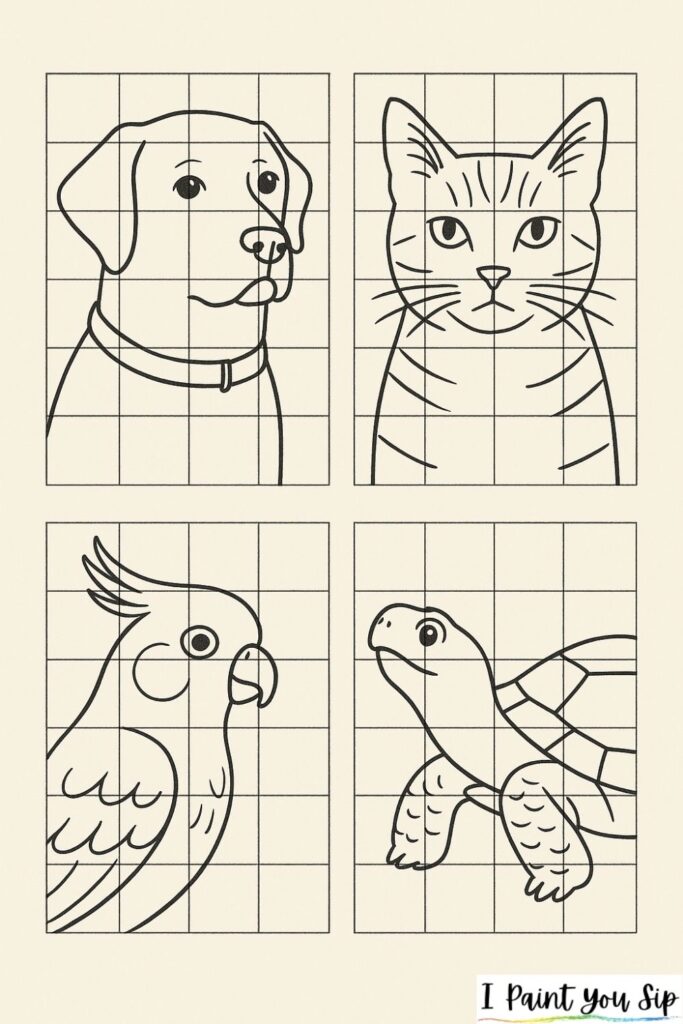
Print or find a photo of your favorite animal: dog, cat, bird, or even a turtle. Draw a light grid over both your reference photo and your paper, then copy square by square. This method helps capture the animal’s proportions and expression perfectly.
Pro tip: Use softer pencils (like 2B or 4B) for fur texture.
#2: Self-Portrait Practice
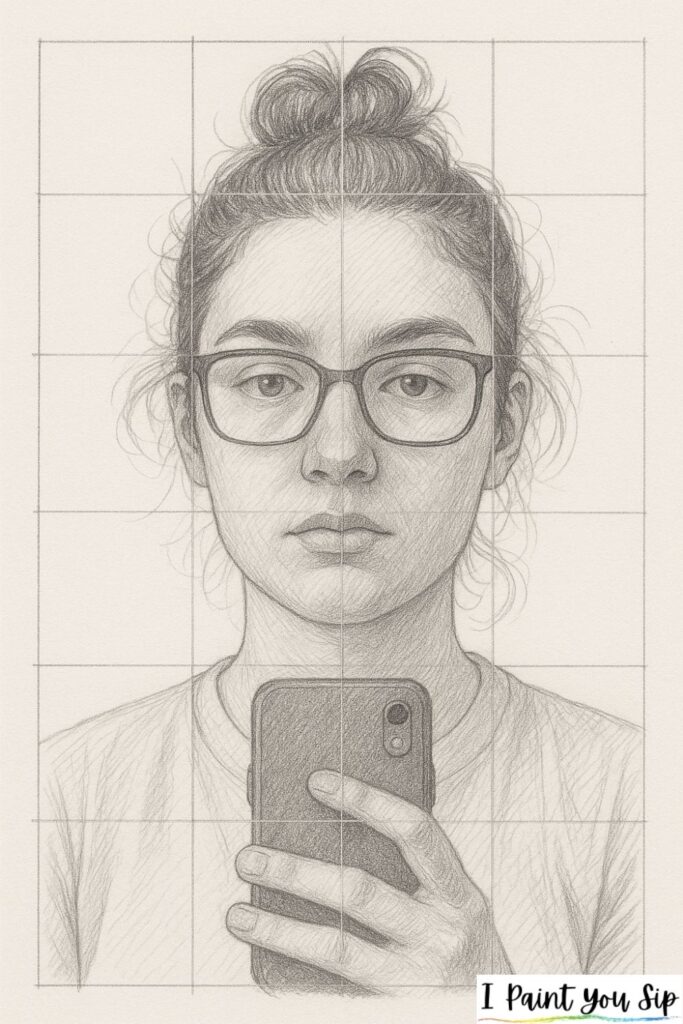
Use a selfie or mirror to create your own portrait with the grid method. Don’t stress about every detail, just focus on one square at a time. This helps train your eyes to notice subtle shadows and angles in your face. You’ll be amazed by how much more realistic your drawings become!
#3: Still Life Scene

Pick a simple setup like a mug, apple, and book, and photograph it. Then use a grid to transfer it to paper. You’ll learn how light and shadow fall across objects. Try shading each square slowly and see how the scene “builds” itself.
#4: Famous Artwork Copy

Choose a piece of art you love, maybe a Van Gogh sunflower or a Monet landscape. Redraw it using the grid technique to understand how the artist saw shapes and color. It’s a wonderful way to learn from the masters while practicing accuracy.
#5: City Skyline
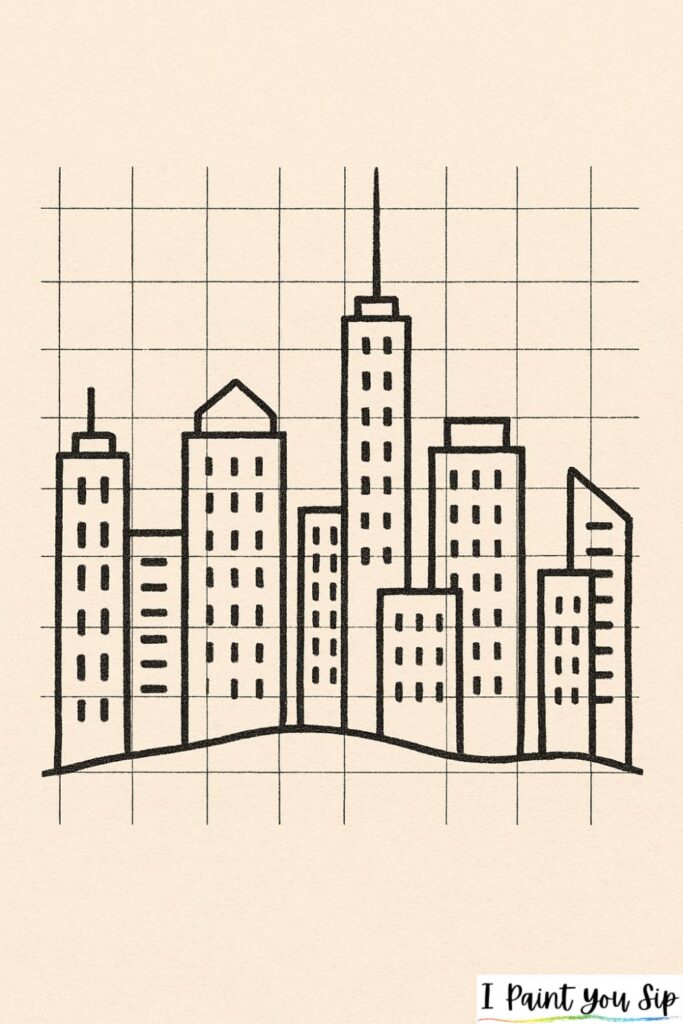
Find a photo of your favorite skyline and turn it into a grid drawing. Focus on the shapes of the buildings, the lines of windows, and the way the horizon curves. This is a great one for beginners who love architecture.
#6: Flower Close-Up

Take a macro photo of a rose, sunflower, or daisy. When you grid it out, you’ll notice all the tiny folds and patterns in the petals. You can leave it as a pencil sketch or add soft watercolor washes for a dreamy finish.
#7: Animal Eyes

Zoom in on just the eyes of different animals, cats, wolves, elephants. Use a small grid for more detail. This exercise teaches you to capture emotion and texture.
I love this one because the results always feel powerful and expressive.
#8: Fruit and Vegetables

Draw your favorite foods! Grid drawing helps you capture natural curves and highlights in apples, peppers, or oranges. It’s surprisingly satisfying to see how realistic your grocery-store sketches can look.
#9: Abstract Pattern Grid

Who says grids have to copy photos? Draw geometric or random shapes inside your grid and fill each square with a different pattern: dots, stripes, waves. It becomes a modern, mosaic-like artwork that’s totally your own.
#10: Landscape Layers

Print a landscape photo like mountains, trees, and a lake and grid it out. This helps you understand depth and perspective. You can start with pencil, then go over it with color pencils or light watercolor washes.
#11: Pet Portrait

Your furry friend deserves a spot on your sketchbook page! Use a clear photo and light grid to help you get the proportions right. Focus square by square, especially around the eyes and nose, where personality shines.
#12: Architecture Study

Choose an old building or a cozy street corner. The grid will guide you to keep straight lines and even proportions. It’s a calming, focused activity and you’ll gain appreciation for the little details in architecture.
#13: Face Expressions

Print a page of small faces showing different emotions: happy, surprised, curious. Grid them and sketch each one. This quick practice helps you understand how eyebrows, eyes, and mouths move together to show feeling.
#14: Ocean Waves

Find a photo of the sea and use a grid to break down the swirling water shapes. It’s a relaxing study in rhythm and motion.
Pro tip: Use smooth, curved pencil strokes for a gentle, flowing look.
#15: Vintage Object

A camera, pocket watch, or teacup, these classic items make great grid studies. The method helps you handle tricky circles and textures without getting overwhelmed.
#16: Animal Silhouettes

If you’re not ready for fine details yet, start with silhouettes. Use the grid to help map out the outline accurately, then fill in with shading or color. Simple but beautiful.
#17: Insect Detail

Butterflies, beetles, and dragonflies look amazing under the grid method. The symmetry and tiny details become manageable square by square. This one’s great for anyone who loves patterns in nature.
#18: Portrait from a Magazine

Grab an old magazine, tear out a portrait, and grid it up. You’ll practice human proportions in a relaxed, no-pressure way.
I recommend starting with faces in black-and-white, it helps you see values more clearly.
#19: Seasonal Scene

Snowy cabin? Beach sunset? Autumn forest? Pick a seasonal scene and grid it to create your own greeting-card-worthy drawing. You can even color it afterward and add personal touches like falling leaves or snowflakes.
Conclusion
The grid method is like training wheels for drawing, it gives you structure until your confidence takes over. The more you practice, the less you’ll rely on it, but it’s always there when you need it. Try mixing it up with different materials: colored pencils, watercolors, or even charcoal.
Remember, perfection isn’t the goal, connection is. Each square teaches you to see more clearly and trust your hand a little more. So grab your ruler and pencil, start small, and let each box become its own tiny world. Creativity is for everyone, and your grid is just the beginning.

Jessie has a passion for bringing people together through creativity and socializing. She has organized many painting events that have left guests with lasting memories and new friendships. She’s also been to various sip events to unleash her own creativity and connect with like-minded individuals.