

Have you ever looked at a stunning drawing and thought, “I could never draw that”? Here’s a little secret: you absolutely can, it just takes patience, practice, and a willingness to try something new.
Challenging drawings aren’t about perfection; they’re about stretching your skills and discovering what you’re truly capable of. Whether you’re an aspiring artist or just ready to level up from simple doodles, tackling a “hard” drawing can be incredibly rewarding.
In this list, I’ve gathered a mix of ideas that will push your limits in the best way possible. From intricate textures to tricky lighting, each one helps you sharpen your eye, your hand, and your creative confidence. Grab your favorite pencil, take a deep breath, and remember: every artist started as a beginner.
Key Takeaways
- Challenging drawings help you grow faster and build confidence.
- You’ll learn to observe light, shape, and texture more deeply.
- Mistakes are part of the process, keep sketching through them.
- Every “hard” idea can be broken into simple steps.
- The more you practice, the easier it all becomes.
#1: Realistic Eye

Start with a light sketch of the eye shape, then focus on adding realistic shading to the iris and eyelid. Pay attention to reflections, tiny highlights make your eye look alive. Use a blending stump or tissue to smooth out pencil marks for a soft finish.
Pro tip: lightly erase a few white spots in the iris for that glossy look.
#2: Glass of Water

This one’s all about reflections and transparency. Outline the glass, waterline, and any bubbles you see. Notice how the light bends objects behind the glass, that’s called refraction, and it’s what makes this exercise tricky but fun. I love this challenge because it teaches patience and observation.
#3: Hand Holding an Object

Hands are famously tough to draw, but pairing them with an object (like a flower or cup) adds extra interest. Start with basic shapes for the palm and fingers before adding details. Remember: hands aren’t perfect, they bend, wrinkle, and move.
#4: Detailed Animal Fur

Choose a furry friend, maybe a cat or fox and zoom in on one area, like the face. Use short, layered pencil strokes to create texture. Vary your pressure so the fur looks soft and natural. Don’t rush this one; it’s about rhythm and flow.
#5: Metallic Object

Try drawing a spoon, ring, or key. Metals reflect light sharply, so focus on contrasts, very light and very dark areas. A kneaded eraser is your best friend here for pulling out bright highlights.
#6: City Skyline at Night

Challenge yourself with the glow of lights against a dark sky. Use strong contrasts, blending charcoal or soft pencil for the night, and sharp white gel pen or eraser marks for windows. It’s dramatic and deeply satisfying when it comes together.
#7: Portrait with Shadows

Skip outlines, just draw the light and dark shapes of the face. This helps you “see” value instead of lines. It’s one of the best ways to improve realism fast, even if it feels awkward at first.
#8: Reflective Eyes on an Animal

Animal eyes can capture so much emotion. Study how light hits the surface, sometimes it reflects the whole world! Add layers of color or graphite until you see that shine come to life.
#9: Water Droplets on a Leaf

Tiny reflections, smooth curves, and shadow play make this a great precision exercise. Outline the droplets first, then shade the shadows beneath them to create the illusion of depth.
Pro tip: a white gel pen works wonders for final highlights.
#10: Draped Fabric

Throw a scarf or towel over a chair and draw what you see. Follow the folds with soft pencil strokes, paying attention to how light and shadow move across the fabric. It’s surprisingly relaxing once you get into the flow.
#11: Self-Portrait in a Mirror

It’s not just about your face, it’s about angles, reflection, and emotion. Don’t worry about perfection; capture your expression and the way the light falls. Every time you draw yourself, you’ll notice new things.
#12: Ocean Waves

Study how waves curl, crash, and foam. Use sweeping lines and layers of shading to build motion. Add a few bright highlights to mimic sunlight on the water, it makes the whole scene sparkle.
#13: Mechanical Object

A clock, bicycle gear, or even a coffee maker is full of complex shapes. Break it down into circles, rectangles, and lines before adding textures. This trains your eye to see structure in everyday things.
#14: Bird in Flight

Motion and proportion are key here. Start with a loose outline of wings and body, then refine the feathers. Don’t stress about getting every detail, capture the movement and energy first.
#15: Human Figure in Motion

Try drawing someone walking, stretching, or dancing. Use quick, light lines to capture the pose before adding form. It’s challenging but builds your sense of proportion and anatomy.
#16: Still Life with Reflections
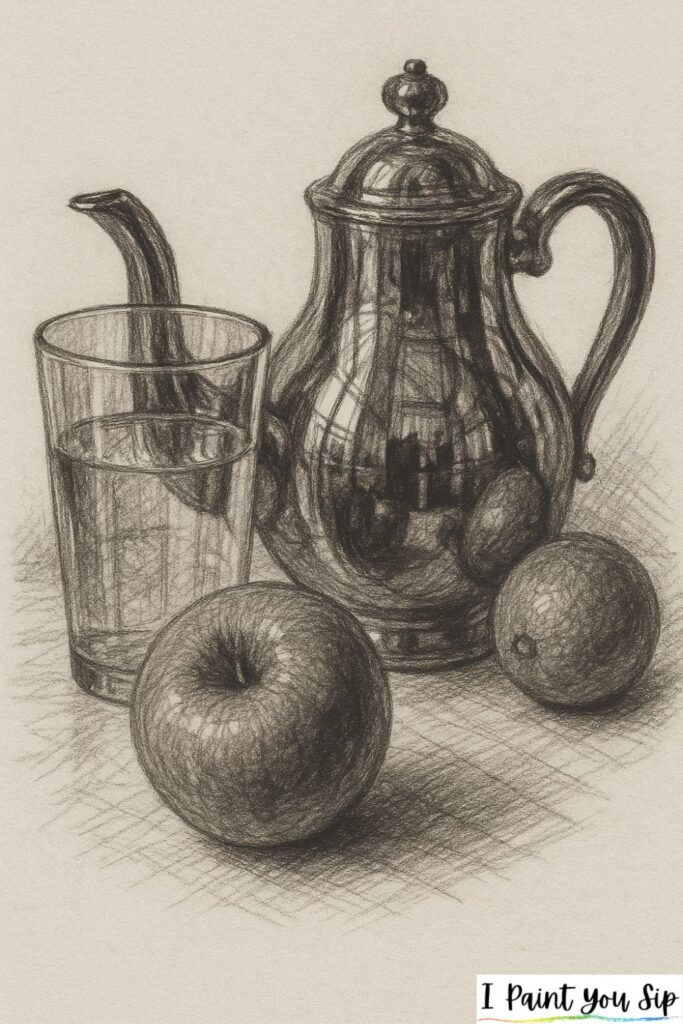
Set up a small scene with glass, fruit, and metal. Pay attention to how objects reflect one another, it’s a puzzle of shapes and tones. This is a classic art exercise that teaches composition beautifully.
#17: Tree Bark Close-Up

Zoom in on the texture of an old tree. Notice how lines twist, crack, and overlap. Layer your pencil strokes for depth, and don’t be afraid to get messy, it’s nature, after all.
#18: Portrait in Colored Pencil

Colored pencils add new complexity: blending tones, layering hues, and keeping things smooth. Practice building up color slowly, you’ll learn patience and control with every stroke.
#19: Architectural Drawing

Buildings are all about perspective. Pick a house, bridge, or old barn and practice those straight lines. Use a ruler to set your vanishing points, then shade to bring your structure to life.
Final Thoughts
Hard drawing ideas might sound intimidating, but they’re really just invitations to grow. Every time you challenge yourself, you’re training your eyes to see more, your hand to move with intention, and your heart to stay curious. Remember no one’s drawings look perfect right away (not even professional artists!).
If one idea feels too tough, start smaller or trace a few outlines first. You’ll learn more by experimenting than by waiting for confidence to show up. Keep your pencils handy, take breaks, and celebrate every small victory.
You’ve got this, every masterpiece starts with a single, brave line.

Jessie has a passion for bringing people together through creativity and socializing. She has organized many painting events that have left guests with lasting memories and new friendships. She’s also been to various sip events to unleash her own creativity and connect with like-minded individuals.