

Do you have a sketchbook with one nice drawing in the middle of a page and a whole lot of white space around it? Mine are full of those pages. For a long time I thought I had to leave them alone, until I started tucking tiny doodles into the gaps. Now those half-empty pages are my favorite ones to flip through.
Tiny doodles are drawings about the size of a fingernail. Because they’re so small, there’s no pressure. If one comes out wonky, it’s half a centimeter of wonky, and the next one will be better. They also work anywhere: margins of class notes, the corner of a planner, the space around a bigger sketch, or a whole page packed edge to edge.
Below are 15 little ideas, from three-second confetti shapes to a full patchwork page. Grab a fine pen and let’s fill some gaps.
Key Takeaways
- Keep each doodle about 1 to 2 cm wide so it tucks into gaps without crowding your main drawing.
- A 0.3 mm fine-liner gives the cleanest tiny lines. A sharp ballpoint is a fine free substitute.
- Repeat one doodle three to five times. Repetition makes even simple shapes look planned.
- Most ideas take under 5 minutes, so they fit into a coffee break or the end of a lesson.
- Odd numbers (3, 5, 7) of a doodle look more natural than even rows.
Easy Ideas
#1: Confetti Sprinkles
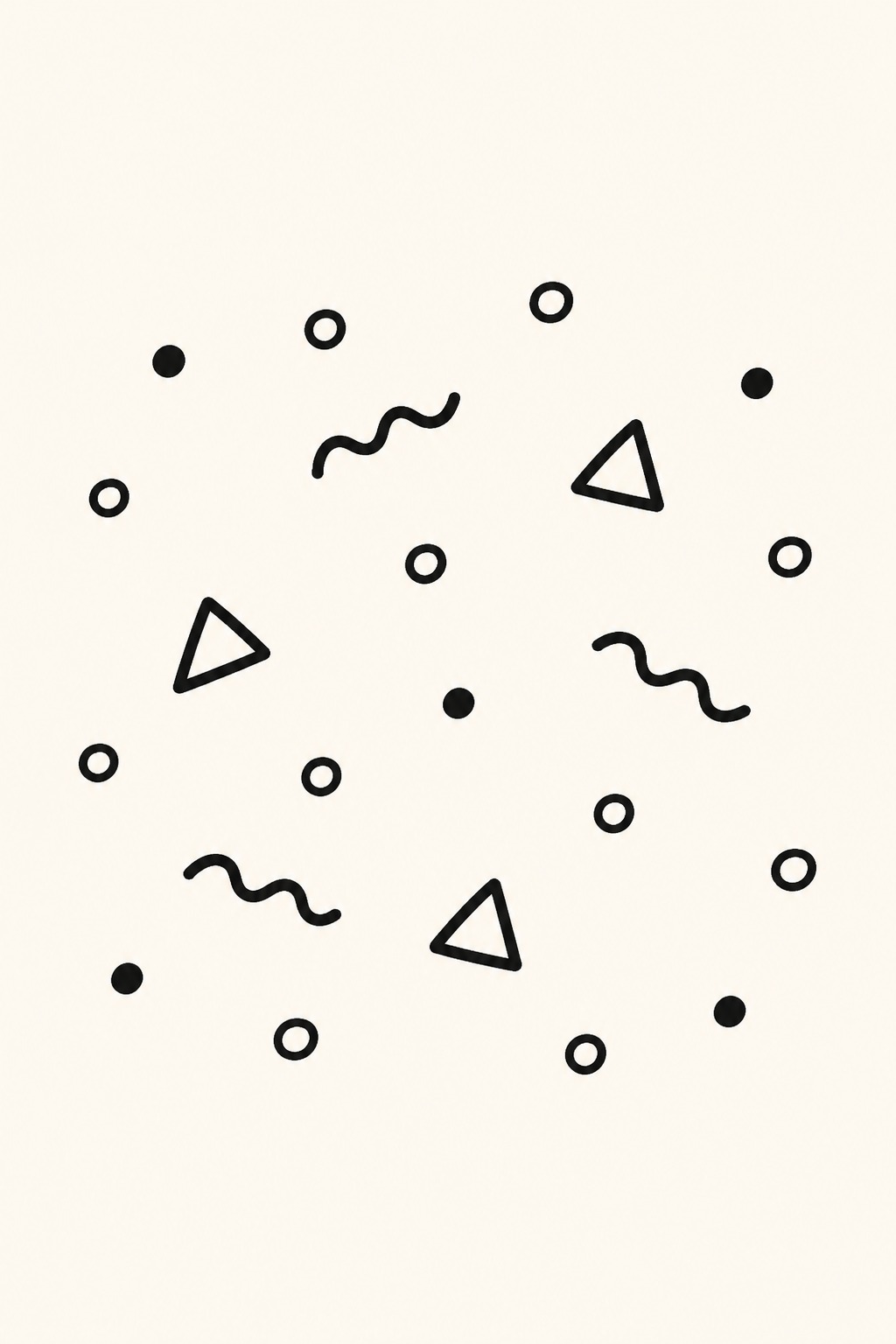
This is the doodle I reach for when a page just feels empty and I don’t want to think. Little dots, triangles, squiggles and circles scattered like party confetti instantly make a gap look lively. It’s also the best warm-up for shaky morning hands.
Try this:
- Pick an empty patch and draw five tiny dots spaced apart.
- Add three small triangles and three short squiggles between them.
- Fill the leftover gaps with tiny open circles.
Difficulty: Easy · Time: ~2 min · You’ll need: any pen
Pro tip: Rotate the triangles so they point in different directions. That’s what makes them look like they’re falling.
#2: Mini Heart Chain
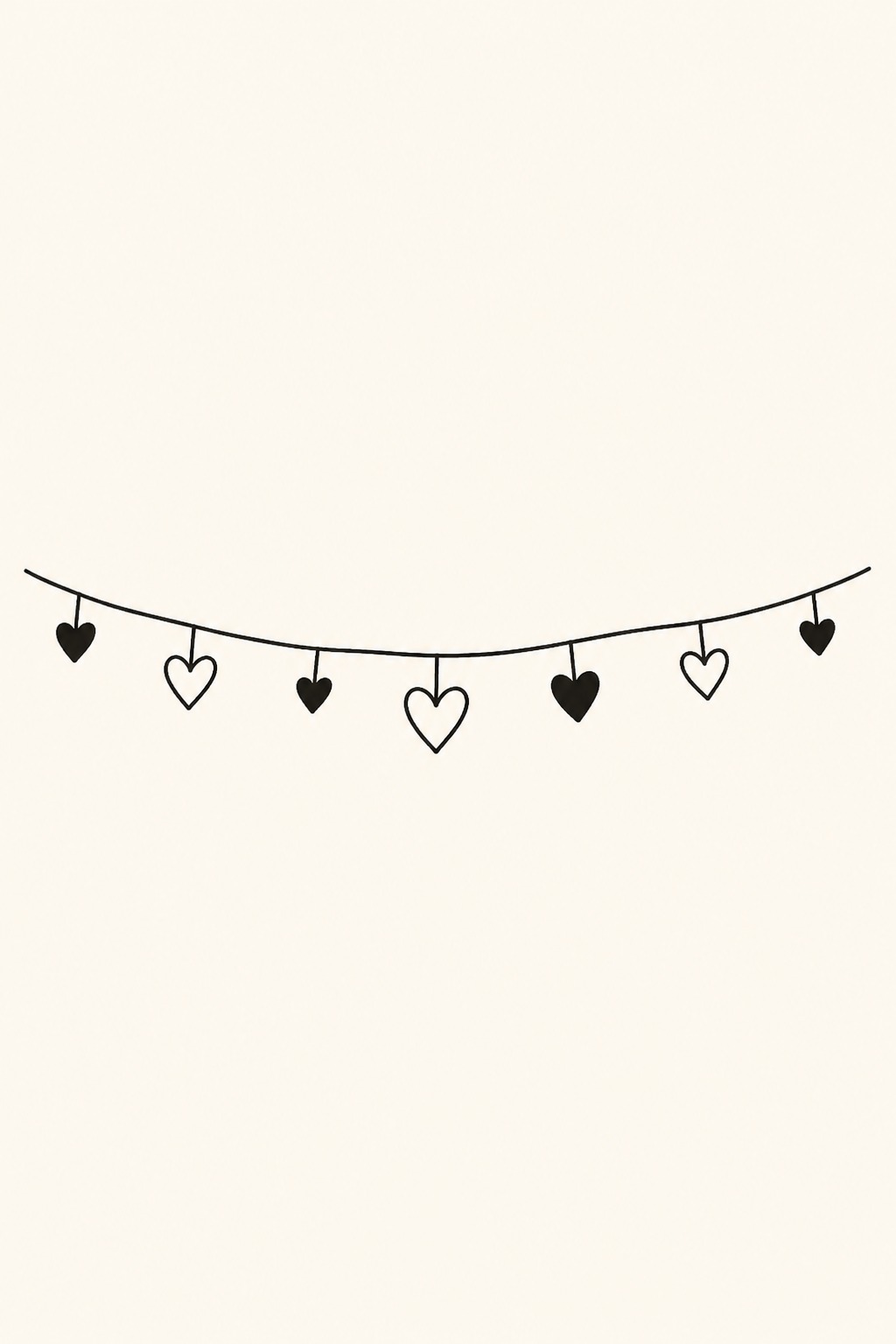
A chain of tiny hearts linked by a thin line makes a sweet border along the top or bottom of a page. It looks like a little garland, and it’s lovely in journals and letters. Vary the heart sizes a little so it feels hand-made.
Try this:
- Draw a gently curving line across the gap, like a loose string.
- Hang a tiny heart from the line every finger-width.
- Fill in every other heart solid black.
Difficulty: Easy · Time: ~3 min · You’ll need: fine-liner or ballpoint
#3: Four-Point Sparkles
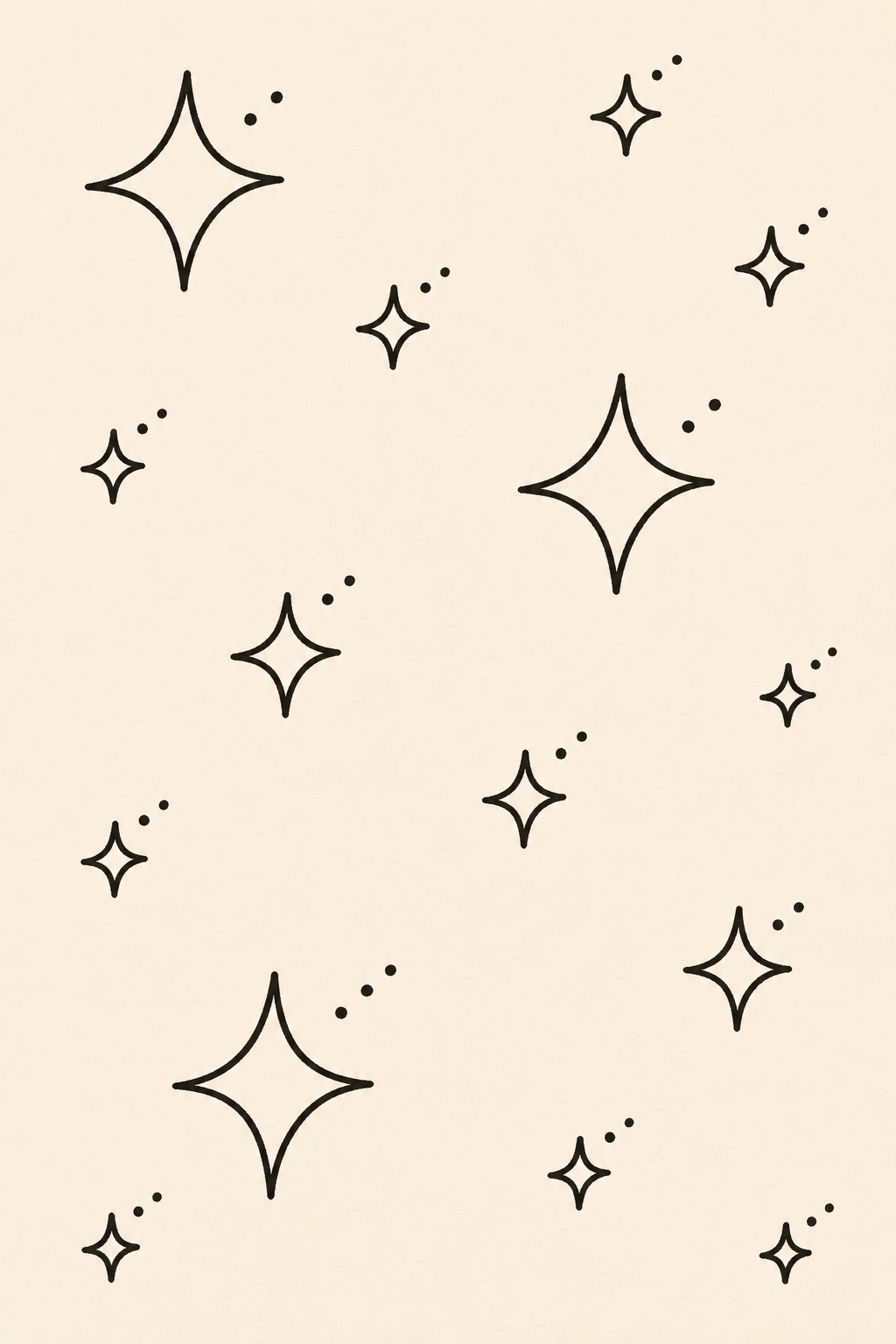
A sparkle is a star with four pointy arms and curved sides, and it makes anything look magical. I scatter these around titles and finished drawings to make them pop. Mix big and tiny ones for a twinkly effect.
Try this:
- Draw a small plus sign as a guide.
- Connect the tips with four inward-curving lines.
- Add two tiny dots next to each sparkle.
Difficulty: Easy · Time: ~2 min · You’ll need: any pen
#4: Leaf Sprigs
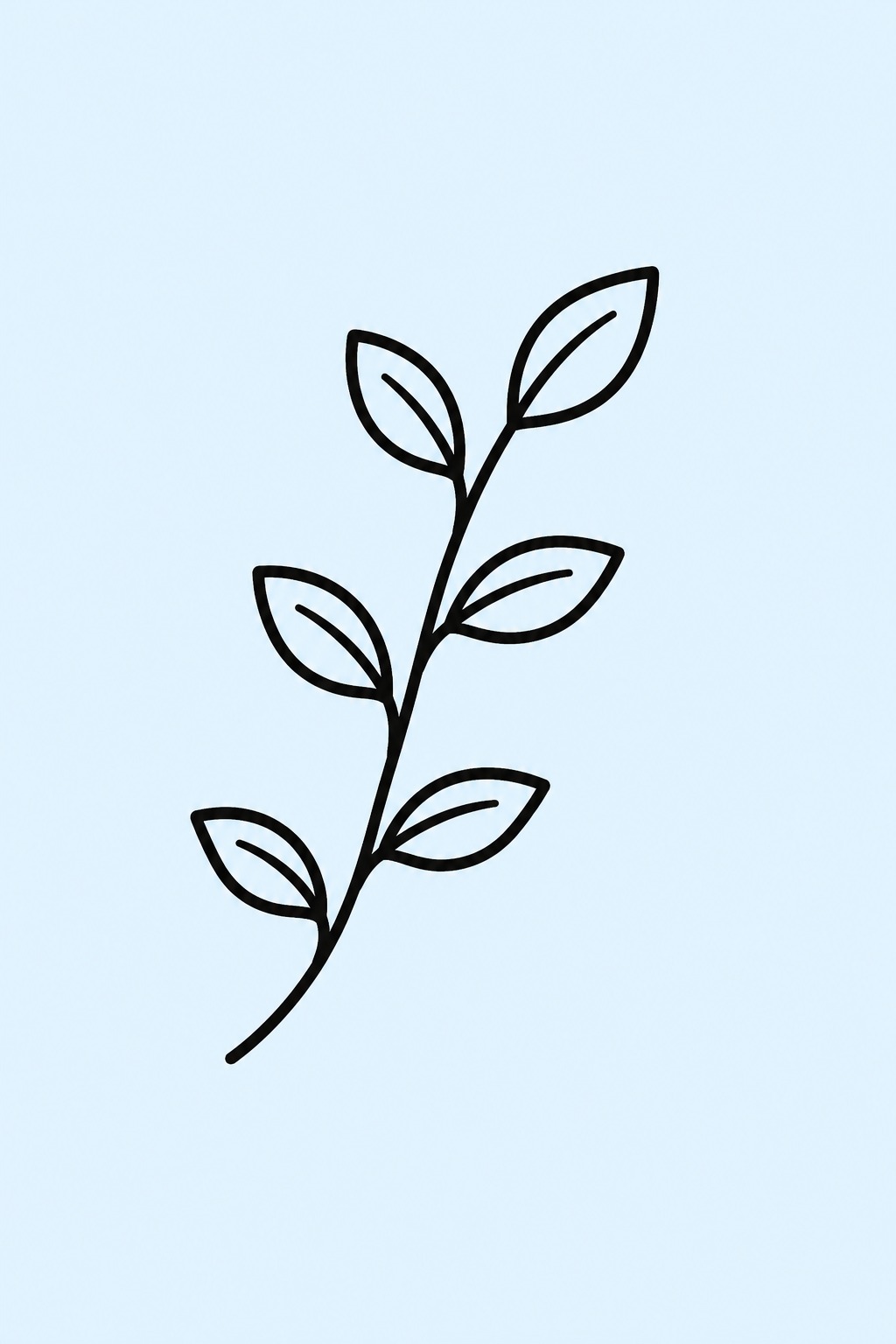
A single stem with a few leaves is calm, simple and fits into long, thin gaps perfectly. I like curling them along the edge of a page so they look like they’re growing into it. They pair well with almost any other doodle on this list.
Try this:
- Draw a curved stem about 2 cm long.
- Add small oval leaves in pairs along the stem.
- Draw a center vein line inside each leaf.
Difficulty: Easy · Time: ~3 min · You’ll need: fine-liner
Common mistake: making all the leaves the same size. Shrink them toward the tip and the sprig looks real.
#5: Mini Daisies
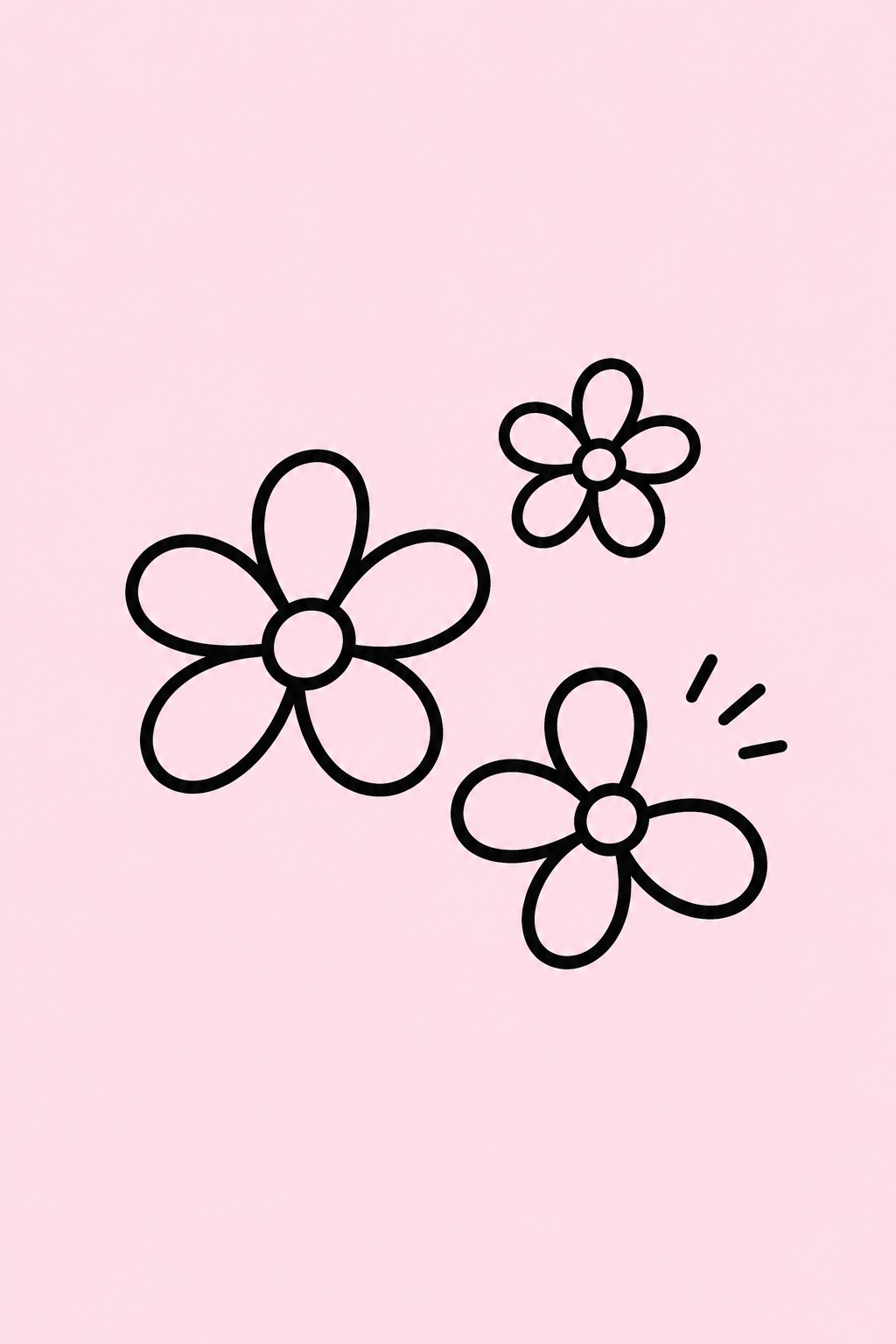
Daisies are just a circle and some loops, so they’re quick to repeat. A cluster of three in a corner looks like a little bouquet. I sometimes draw one with a missing petal, as if someone was playing “loves me, loves me not”.
Try this:
- Draw a tiny circle for the center.
- Add five or six rounded loop petals around it.
- Draw two more daisies of different sizes beside it.
Difficulty: Easy · Time: ~3 min · You’ll need: any pen
#6: Peeking Corner Critters

These are tiny round characters peeking in from the edge of the page, with only their eyes and fingertips showing. They’re the cutest way to use a corner, and they make anyone flipping through your book smile. Draw one per page and it becomes a little game.
Try this:
- Draw a half circle coming in from the page edge.
- Add two big dot eyes near the top.
- Draw two tiny hands gripping the edge below the eyes.
Difficulty: Easy · Time: ~4 min · You’ll need: any pen
I love this one because it makes a blank corner feel like someone lives there.
Medium Ideas
#7: Tiny Paper Boats
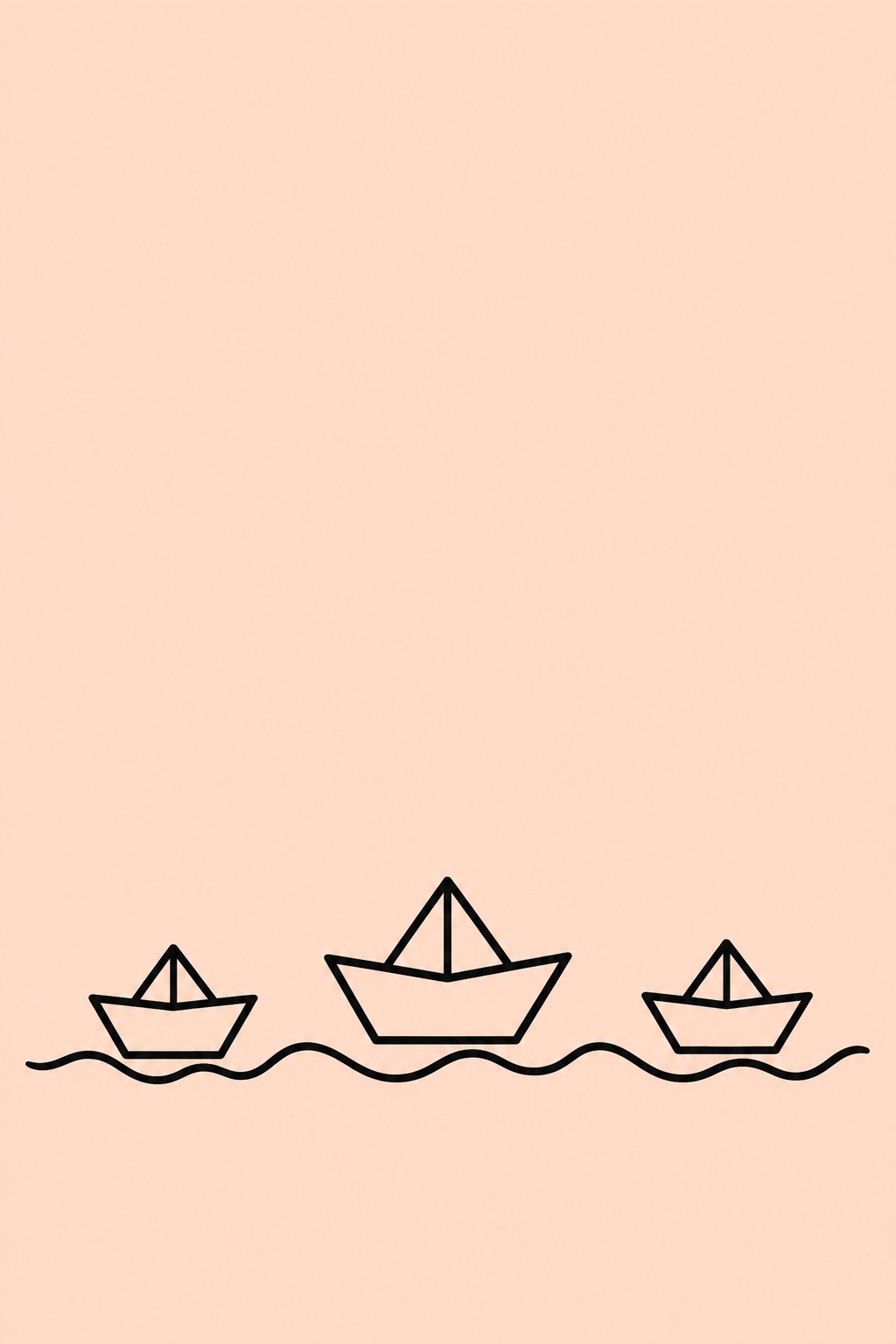
A folded paper boat is made of a few straight lines, which makes it great practice for neat edges. Float a little fleet along a wavy line at the bottom of the page. They look sweet next to notes about trips or plans.
Try this:
- Draw a short flat-bottomed trapezoid for the hull.
- Add a triangle sail with a fold line down the middle.
- Draw a small wavy water line underneath.
Difficulty: Medium · Time: ~4 min · You’ll need: fine-liner
#8: Mini Hot-Air Balloons

Hot-air balloons fill tall, narrow gaps beautifully, and you can stack two or three at different heights. Stripes or a simple pattern on the balloon makes each one different. They feel light and dreamy on a page.
Try this:
- Draw a rounded balloon shape that narrows at the bottom.
- Add curved stripes from top to bottom.
- Hang a tiny square basket with two short lines.
Difficulty: Medium · Time: ~5 min · You’ll need: fine-liner
Pro tip: Draw the farthest balloon smallest and highest. It creates instant depth in a 2 cm space.
#9: Little Ladybugs
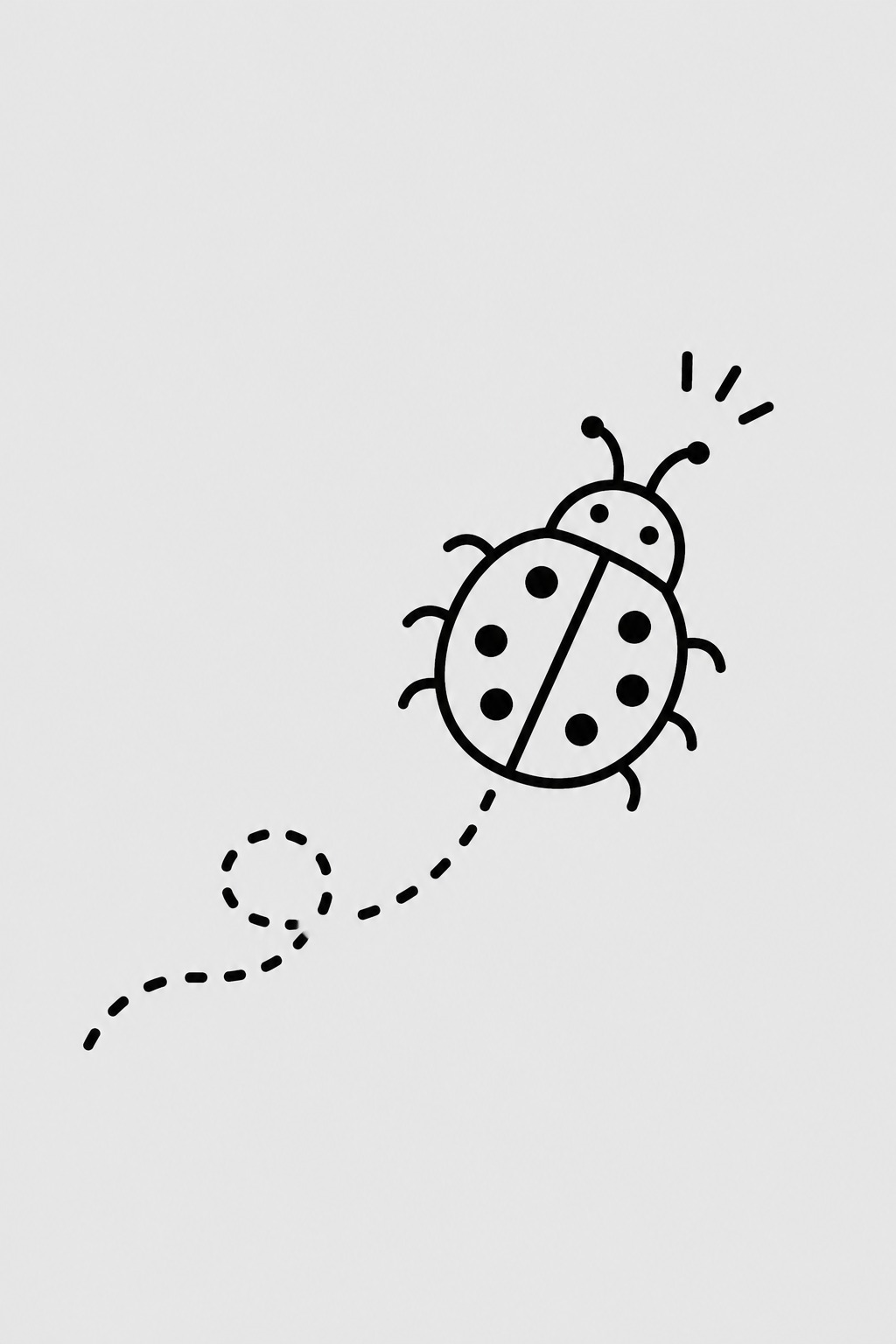
A ladybug is a dome with a line down the middle and a few spots, and it looks great crawling along a margin. Give one a dotted trail behind it to show where it walked. Kids love this one in their notebooks.
Try this:
- Draw a small oval for the body with a half circle head.
- Draw a line down the back and add spots on both sides.
- Add six tiny legs and a dotted trail behind it.
Difficulty: Medium · Time: ~4 min · You’ll need: any pen
#10: Pocket-Size Houses

A row of tiny houses along the bottom of a page turns it into a little street. Change the roof shapes and window counts so no two houses match. It’s one of my favorite ways to finish a page.
Try this:
- Draw three or four small rectangles side by side, touching.
- Top each one with a different roof: pointed, flat or curved.
- Add tiny square windows and a door to each.
Difficulty: Medium · Time: ~6 min · You’ll need: fine-liner
Common mistake: drawing the windows too big. Keep them about the size of a grain of rice.
#11: Mini Polaroid Frames
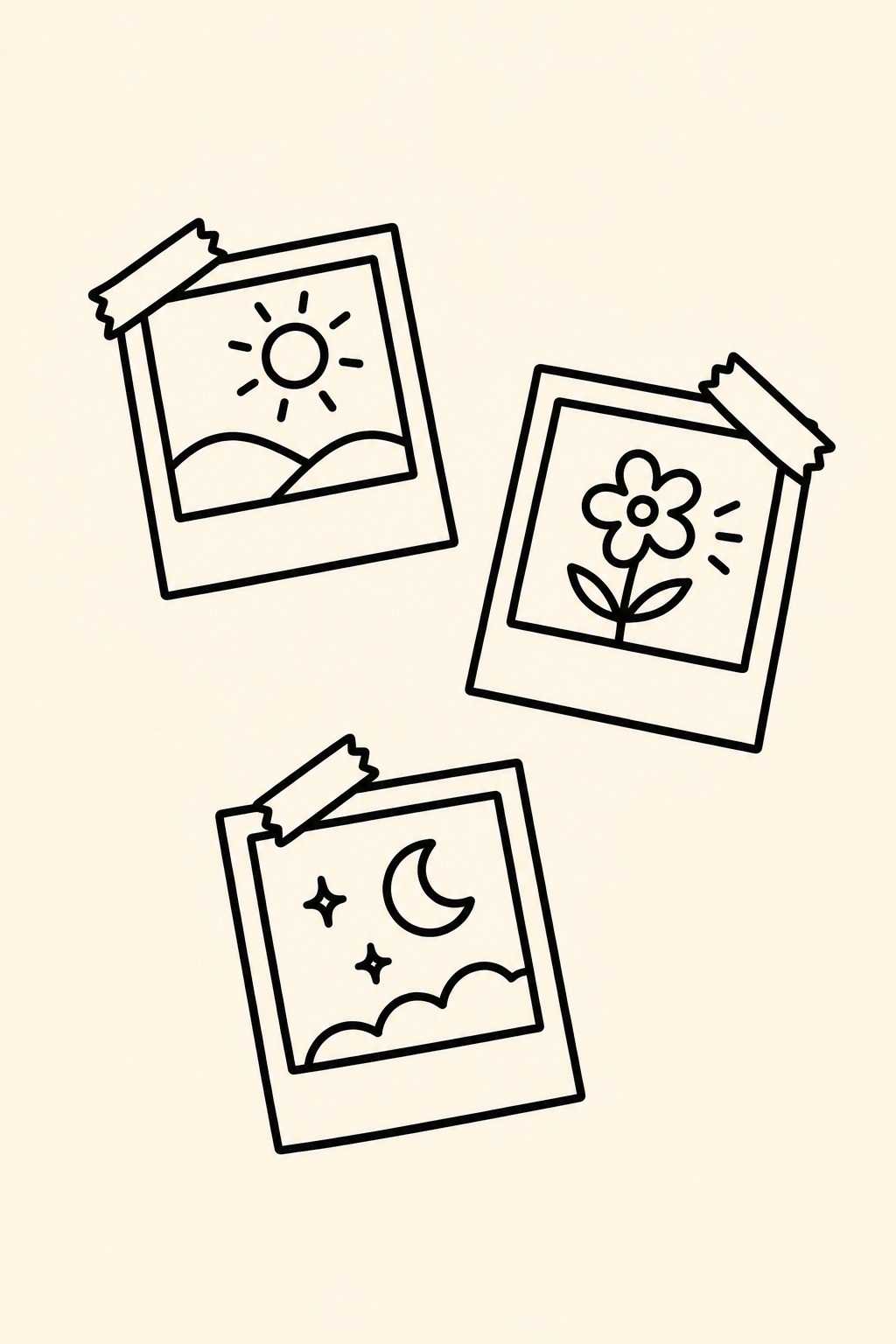
Draw a small instant-photo frame and put a tiny scene inside, like a sun over hills or a single flower. Tilt a few frames at angles so they look pinned to the page. They’re perfect in a travel or memory journal.
Try this:
- Draw a small square with a thicker strip at the bottom.
- Sketch a very simple scene inside the square.
- Add a tiny piece of tape across one top corner.
Difficulty: Medium · Time: ~6 min · You’ll need: fine-liner
#12: Tiny Bee Trail
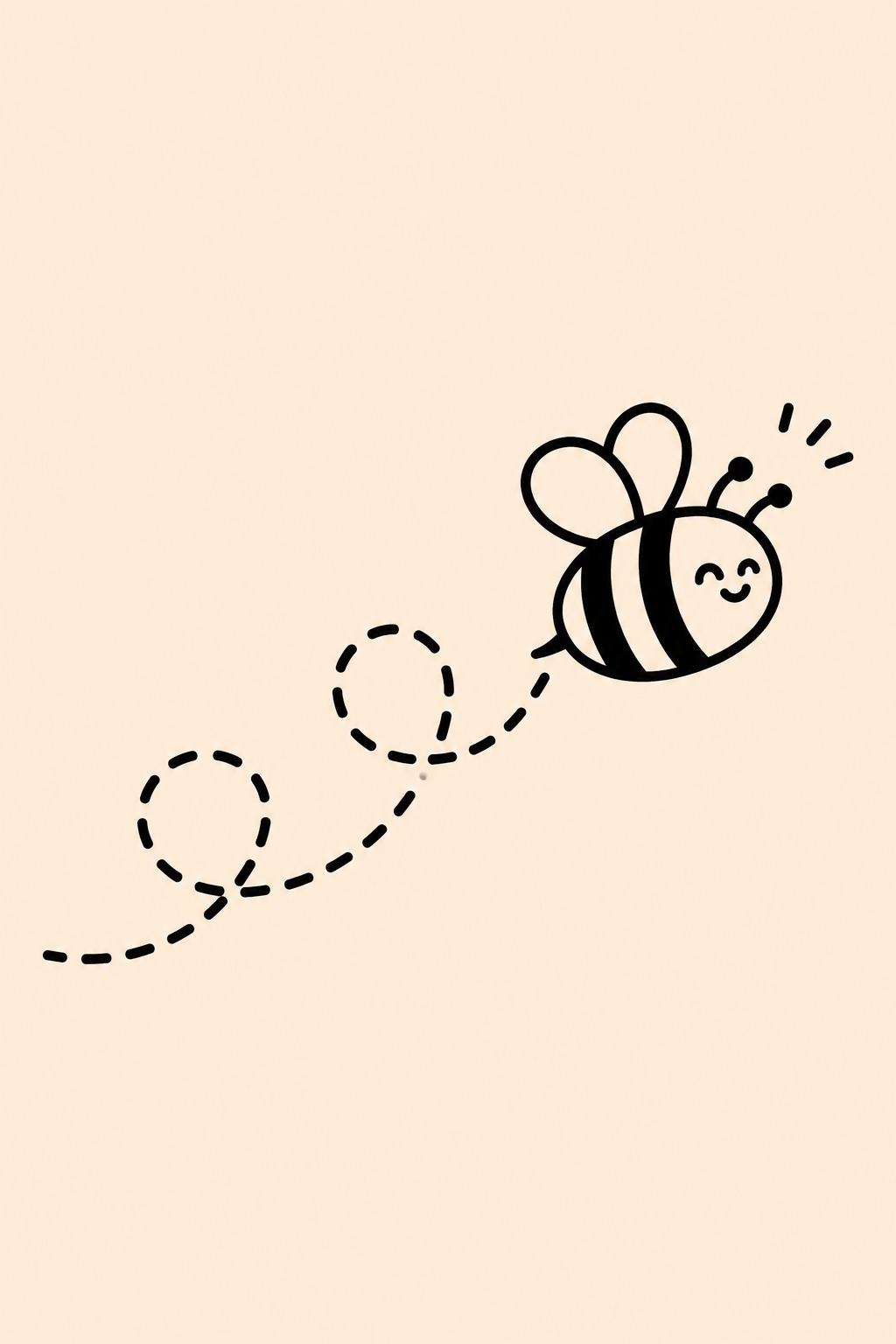
A little bee with a looping dashed flight path is great for linking two drawings across a page. The loops guide your eye and fill space at the same time. Give the bee a happy face to make it a tiny character.
Try this:
- Draw an oval body with two stripes and a dot eye.
- Add two rounded wings on top.
- Draw a looping dashed line trailing behind it.
Difficulty: Medium · Time: ~5 min · You’ll need: any pen
Challenge Ideas
#13: Teeny Bookshelf

A miniature bookshelf packed with tiny spines, a plant and a mug is a great challenge in fitting detail into a small space. It’s satisfying to fill each shelf. Keep the lines thin so it doesn’t turn into a black blob.
Try this:
- Draw a rectangle about 3 cm wide with two shelf lines.
- Fill the shelves with thin upright rectangles for books, some leaning.
- Add a tiny potted plant and a round object to break up the rows.
Difficulty: Hard · Time: ~10 min · You’ll need: fine-liner, ruler optional
Pro tip: Fill a few book spines solid black. The contrast stops it looking flat.
#14: Mini Jellyfish Drift
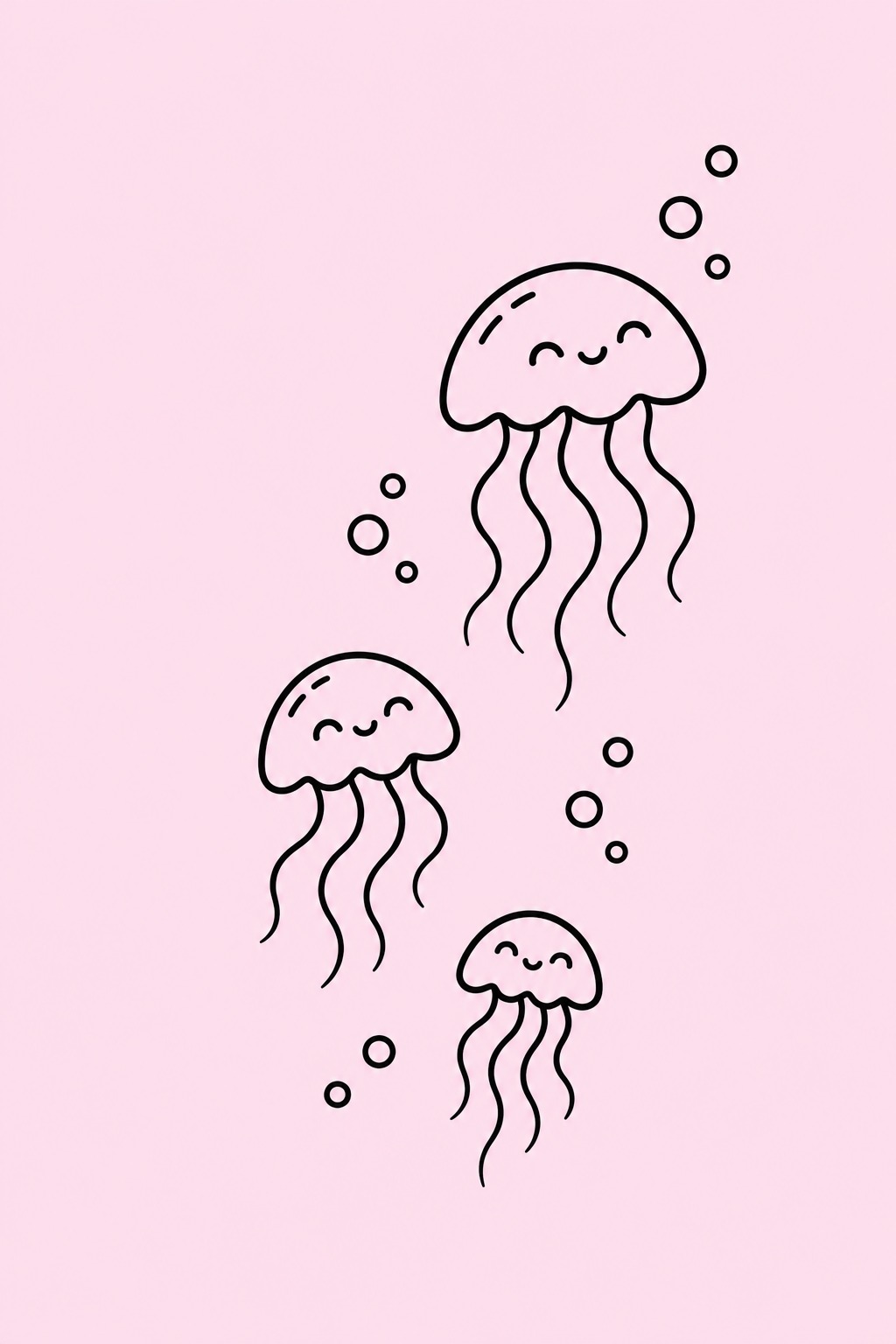
Tiny jellyfish with long wavy tentacles flow nicely down the side of a page. The challenge is keeping the tentacles thin and graceful at such a small size. A few bubbles around them make the whole group feel like it’s floating.
Try this:
- Draw a small dome shape with a wavy bottom edge.
- Add three to five long, thin wavy tentacles.
- Repeat two more smaller jellyfish and add tiny bubbles.
Difficulty: Hard · Time: ~8 min · You’ll need: fine-liner
#15: Doodle Patchwork Page
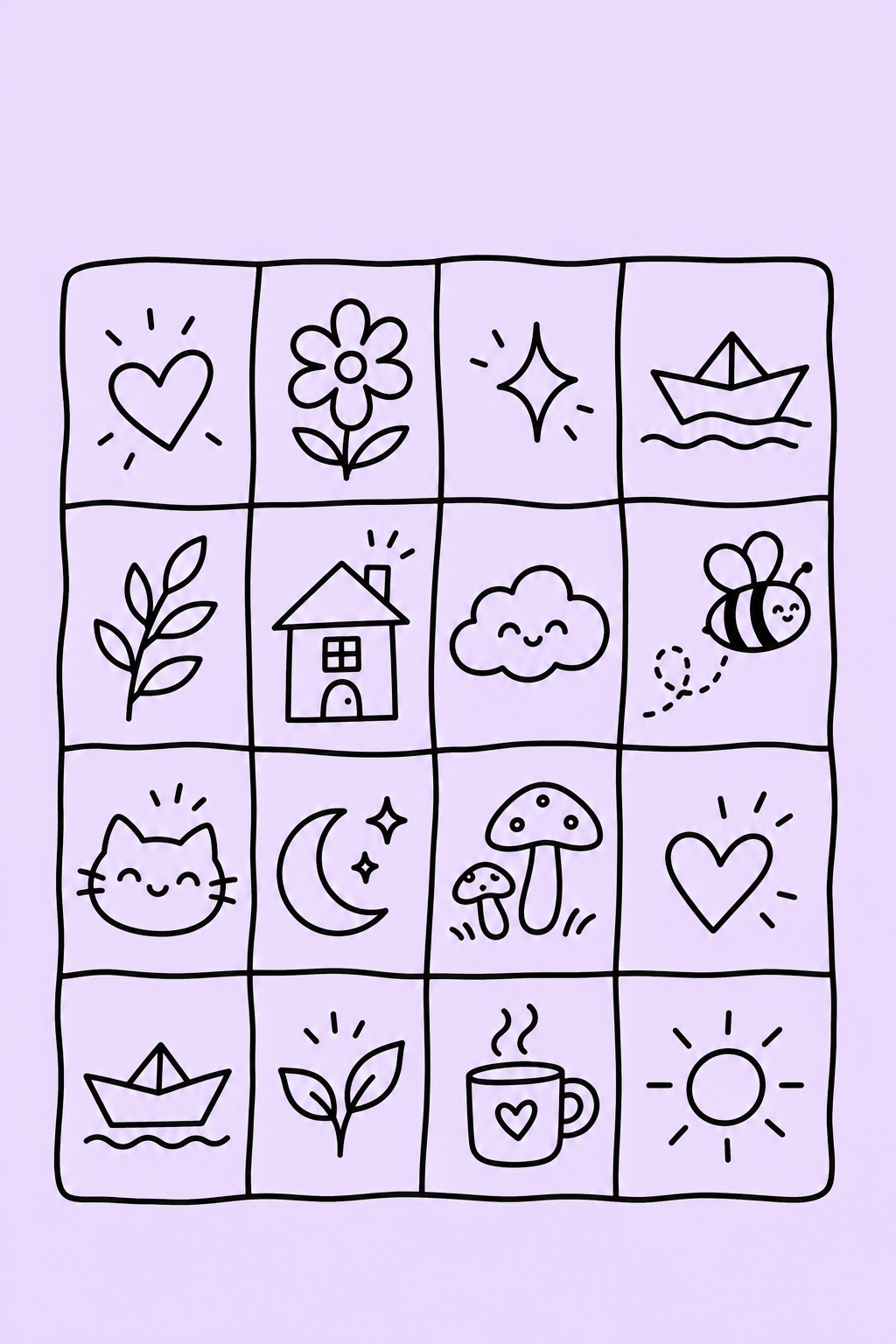
This one pulls everything together: divide a page into small boxes and fill each box with a different tiny doodle from this list. It’s the doodle version of a quilt. It takes a while, but it’s the page people always ask to see.
Try this:
- Lightly pencil a grid of uneven boxes across the page.
- Fill each box with one tiny doodle, repeating a few favorites.
- Ink the grid lines and erase the pencil once dry.
Difficulty: Hard · Time: ~25 min · You’ll need: fine-liner, pencil
I like to do one box a day. By the end of the month I have a finished page and a record of my doodle mood.
FAQ
What should I doodle in an empty sketchbook?
Start with tiny repeatable shapes like sparkles, hearts, leaves and dots. They need no planning and quickly make a page feel full. Once you’re warmed up, try small objects like houses or boats, or build a patchwork page from several doodles.
How do you fill empty space in a drawing?
Use small filler doodles that match the mood of your main drawing, and group them in odd numbers. Keep them smaller and lighter than the main subject so they support it instead of competing with it.
What pen is best for tiny doodles?
A fine-liner between 0.1 and 0.3 mm gives crisp lines at small sizes. Gel pens and sharp ballpoints work too, but test them on scrap paper first, since some smudge or bleed through thin pages.
Are tiny doodles good for bullet journals and notes?
Yes. Tiny doodles are a quick way to decorate headers, mark sections and fill the white space in a bullet journal or class notes without taking much time or room.
Final Thoughts
Tiny doodles changed how I see a blank page. Instead of a big white space waiting for something important, it becomes a place to play. A few sparkles here, a peeking critter there, and suddenly the page has personality.
Don’t stress if your first ladybug looks like a potato with legs. At this size, nobody can see the wobbles, and every one you draw makes the next one steadier. The more you repeat a doodle, the more it starts to look like yours.
If you enjoy working small, try giving your mini doodles faces with our easy doodle characters, or pick a few sweet friends from these cute doodle character ideas for sketchbooks. For bigger projects, our poster drawing ideas are a fun next step.
Grab your pen, find an empty corner and start small. Every artist’s sketchbook is built one tiny mark at a time, and yours is no different.

Jessie has a passion for bringing people together through creativity and socializing. She has organized many painting events that have left guests with lasting memories and new friendships. She’s also been to various sip events to unleash her own creativity and connect with like-minded individuals.