
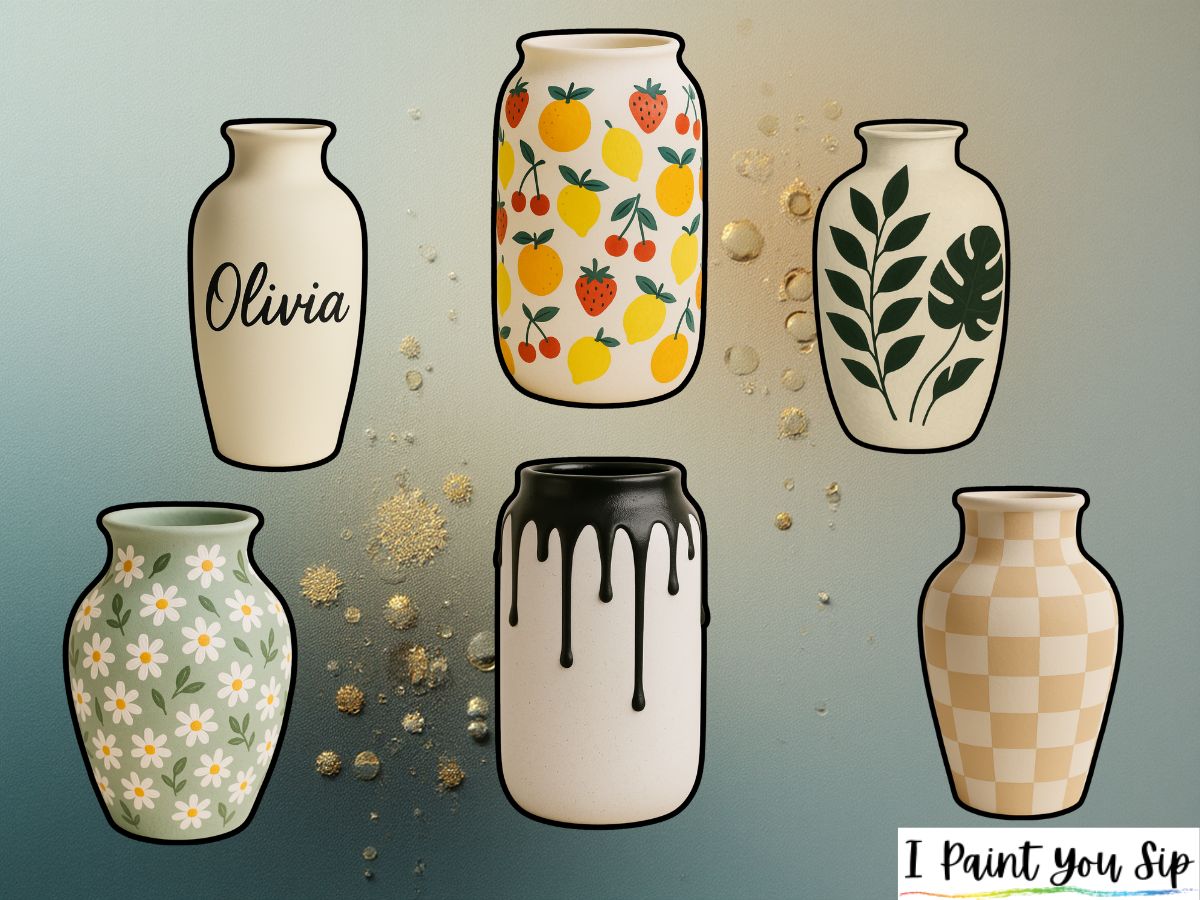
Have you ever stared at a plain vase and thought, “I wish I could make this look a little more… special?” The good news is, you absolutely can. Vase painting is one of the easiest beginner-friendly art projects because it only takes a few supplies, a little imagination, and the courage to start.
You don’t need fancy paints or perfect lines. You don’t even need traditional “art skills.” What you do need is a willingness to play, explore, and enjoy the process.
Painting vases is also a great way to refresh old décor, personalize gifts, or spend a fun afternoon with kids, friends, or your partner. Once you realize how simple it is, you may want to paint every vase in your house (trust me, it happens). If you’re ready for ideas that are doable, charming, and surprisingly impressive, keep reading, there’s something here for every style and every skill level.
Key Takeaways
- You don’t need experience, these ideas are simple and beginner-friendly.
- Everyday tools (sponges, tape, Q-tips, markers) work beautifully.
- Imperfect lines and textures add character.
- Great way to reuse, upcycle, or refresh old or thrifted vases.
- Most projects can be done in under an hour.
#1: Soft Pastel Ombre

Blend two or three soft pastel colors from bottom to top using a sponge. The trick is to dab gently where the colors meet so they melt together. This creates a dreamy, cloud-like fade that works on any vase shape. Use acrylic paint for easy layering and drying.
Pro Tip: If the transitions look harsh, let it dry and add another soft layer on top.
#2: Simple Stripe Wrap

Wrap painter’s tape around your vase, either evenly spaced or intentionally random. Paint the exposed areas, peel the tape, and boom, clean stripes! This one always looks polished even if you’re brand-new to painting. Try metallic stripes for a little sparkle.
I love this one because it always gets compliments.
#3: Modern Brushstroke Doodles

Think of loose, imperfect brushstrokes, nothing fancy. Add small clusters of marks: swooshes, dashes, short lines, and blobs. Stick to one color or mix a few. The beauty is in the spontaneity. It’s modern, artsy, and wildly forgiving.
#4: Cute Daisy Dots
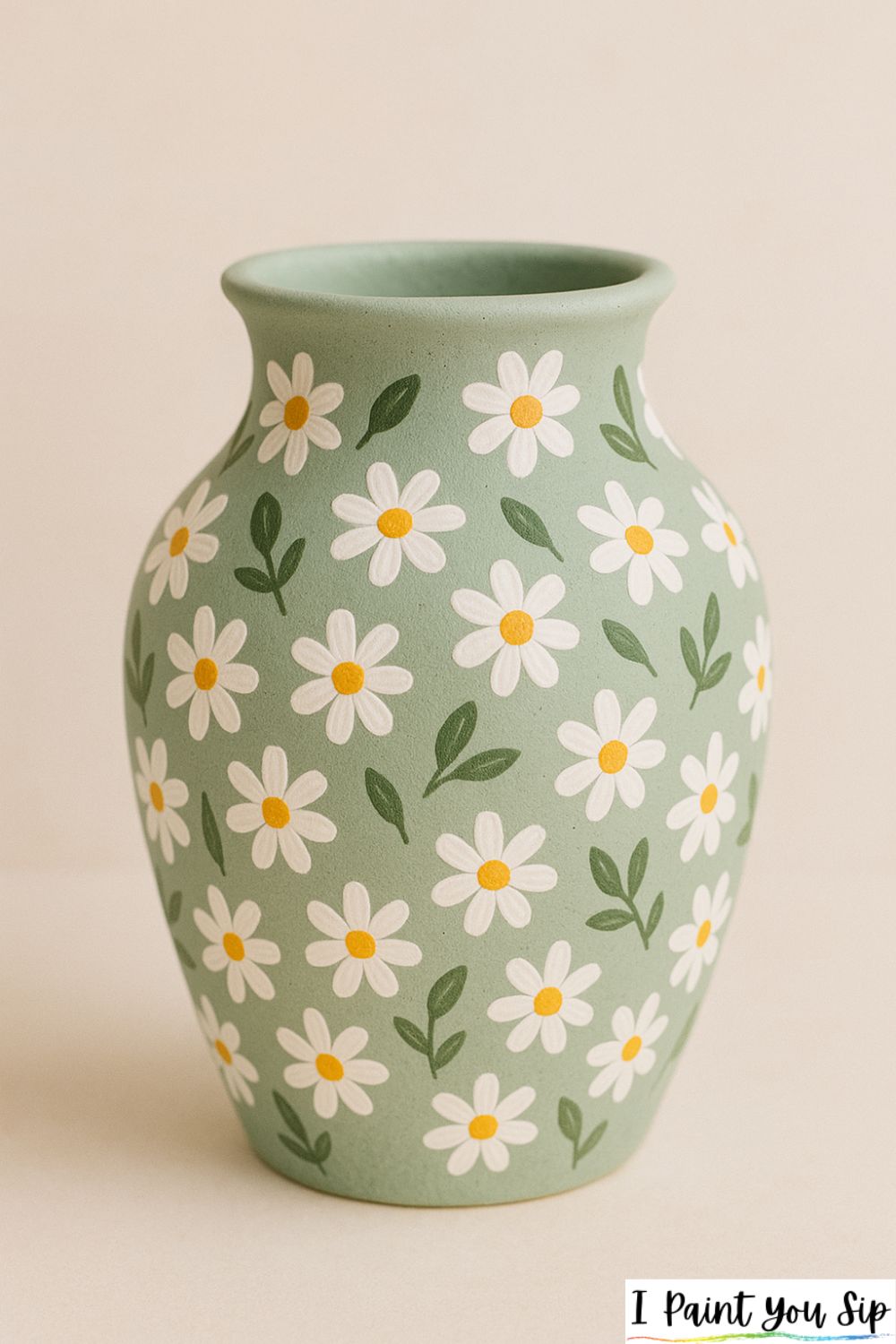
Use a Q-tip or the back of a paintbrush to dot simple little flowers. Think white petals, yellow centers, soft greenery. Even kids can do this one. Scatter the daisies all around or cluster them at the top or bottom.
Pro Tip: Don’t worry about symmetry, tiny differences make it charming.
#5: Abstract Color Blocks
Choose 3–4 colors you love and block them out in large shapes. Make some curvy, some straight-edged, some overlapping. This creates a bold, museum-style look with minimal effort. Use a thin brush to outline shapes in black or gold if you want extra definition.
#6: Boho Line Art

Paint simple black or brown continuous lines faces, leaves, waves, or abstract figures. Start with a light pencil sketch if you’re nervous. This style looks expensive and trendy while being super easy to pull off.
Pro Tip: Water down your paint just a little for smoother lines.
#7: Speckled Stone Effect

Mix paint with a touch of baking soda to create a chalky texture. Then lightly flick darker paint across the vase with an old toothbrush. The speckles create a cool stone-like finish. This is perfect for minimalist or rustic decor.
#8: Drippy Paint Top
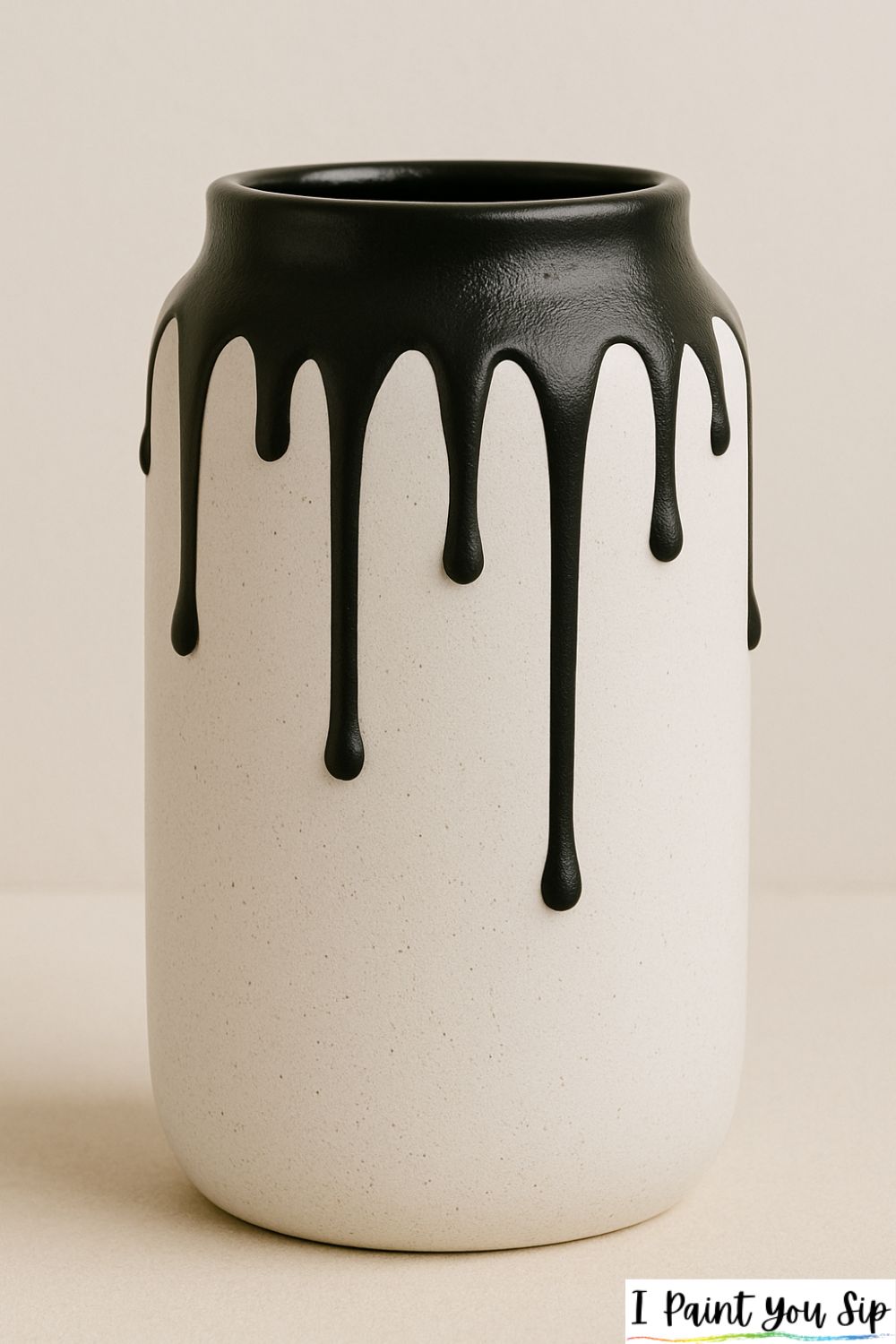
Add paint to the rim of the vase and let it drip naturally down the sides. The key is to use slightly thinned paint. Every drip will be different, and that’s what makes it beautiful. Use contrasting colors for the most dramatic effect.
#9: Galaxy Swirl Vase

Blend purples, blues, blacks, and a little gold using circular motions. Add white dots for stars. It sounds fancy, but it’s really just layering colors and having fun with movement. Great for space lovers or kids who love dramatic color.
#10: Minimalist Monochrome

Choose one color and paint the entire vase, then add subtle lines or tiny dots in a slightly darker shade. This keeps things modern and simple. Works especially well on tall, skinny vases.
Pro Tip: Matte paint gives a designer look instantly.
#11: Coastal Wave Motif

Use soft blues and whites to create simple wave curves. Think gentle, rolling lines rather than detailed realism. This brings a calming, beachy feel to any room. Pair it with natural or woven décor for a full coastal vibe.
#12: Whimsical Fruit Patterns

Paint tiny oranges, lemons, cherries, or strawberries all around the vase. Keep them cartoon-style, simple circles and ovals with leaves. This is adorable in kitchens or dining spaces. Kids also have a blast decorating with fruit shapes.
#13: Earthy Terracotta Makeover

Even if your vase isn’t terracotta, you can fake it! Mix acrylic paint with baking soda to create texture, then paint with warm clay-like tones. Add simple white patterns or leave it natural. Looks like expensive pottery, but it’s DIY magic.
#14: Checkerboard Chic
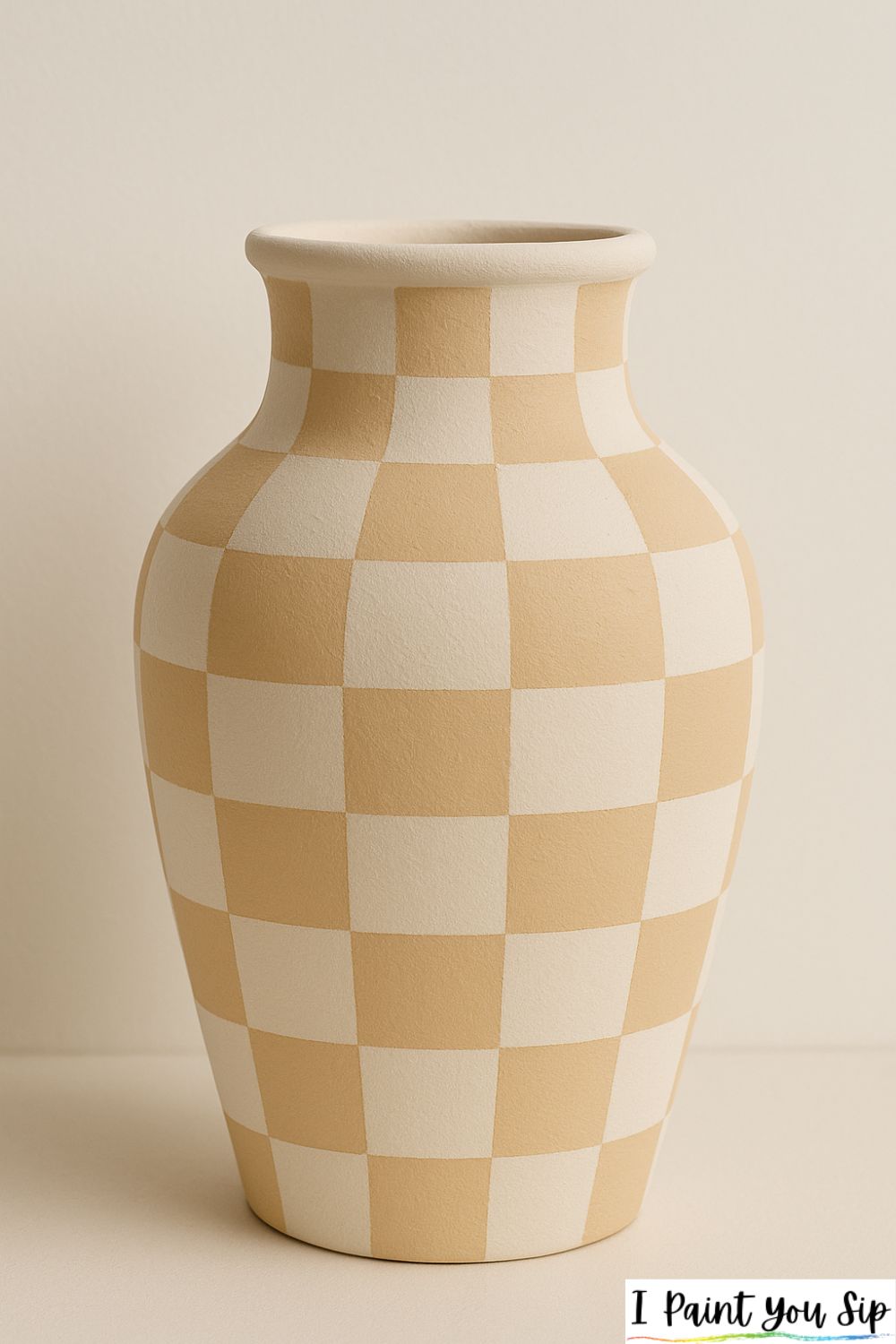
Use tape to create a grid pattern, then paint alternating squares. This one feels playful and stylish at the same time. Try beige and white for a subtle look, or go bold with pink and red.
Pro Tip: Don’t stress over wonky lines; they add charm.
#15: Nature-Inspired Leaf Silhouettes

Paint simple leaf shapes in dark green or black. Ferns, monstera, palm leaves, whatever you love. Keep them flat and graphic, not detailed, for that clean, fresh look. Works well with neutral backgrounds.
#16: Metallic Accent Strokes

Add gold, silver, or copper strokes over any base color. You don’t need a pattern, just little highlights here and there. Metallics catch the light beautifully and make even simple vases look fancy.
I recommend this if you love subtle glam.
#17: Personalized Lettering Vase
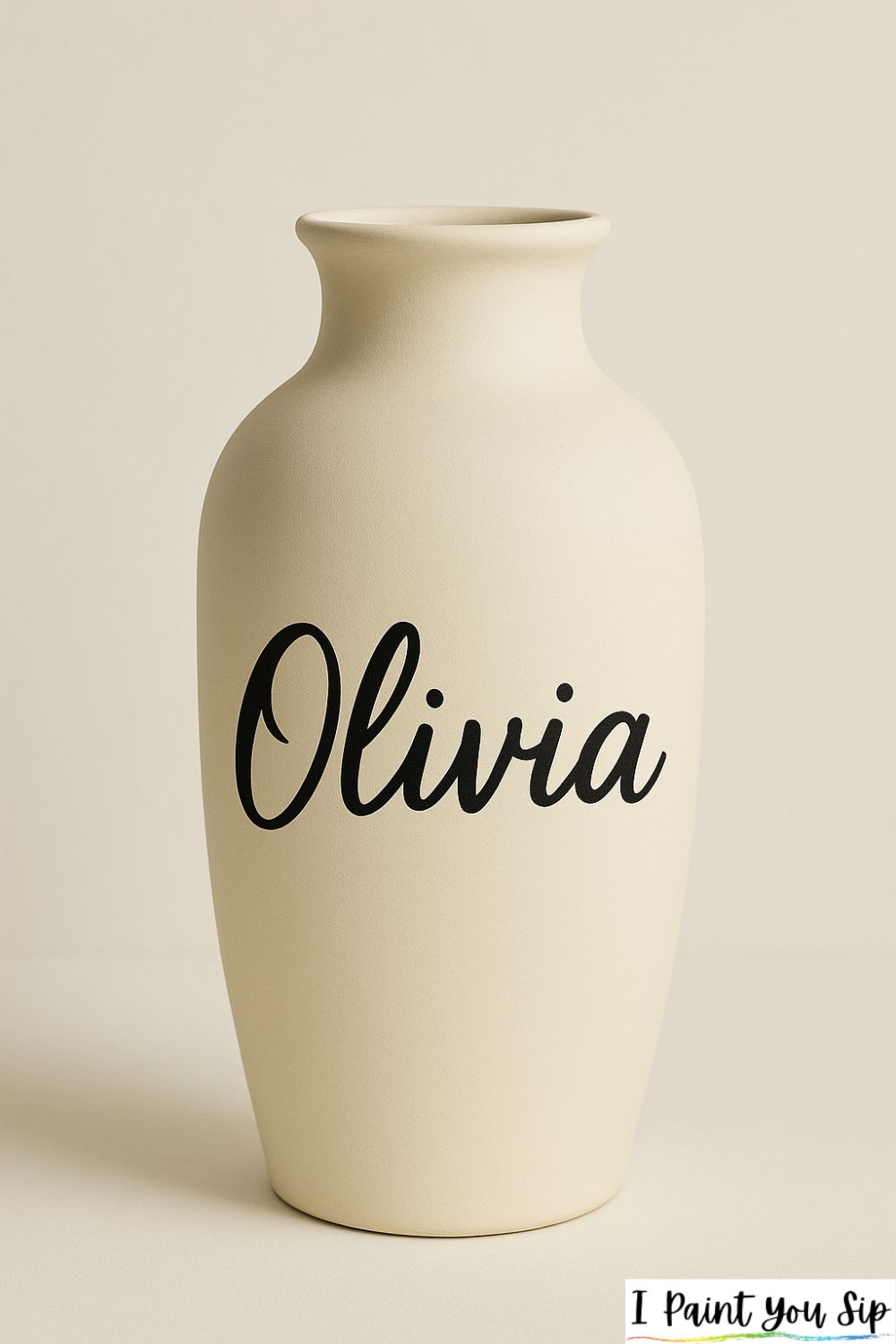
Write a name, a short quote, or even a single meaningful word. Use a paint pen if hand-painting letters feels stressful. This makes a lovely handmade gift. Keep it simple, clean, and heartfelt.
Conclusion
Vase painting is one of those creative projects that looks complicated from the outside but feels surprisingly relaxing once you start. The best part? There’s no “wrong” way to do it. Drips, uneven lines, random brushstrokes, they all add personality and make your piece uniquely yours. If something doesn’t look the way you hoped, paint over it and try again. Acrylic paint is wonderfully forgiving.
As you keep experimenting, you’ll start to discover your own style, maybe you love soft pastels, or maybe bold shapes are more your vibe. These ideas are just starting points, and you can mix, match, or reinvent them however you like. If you enjoyed painting a vase, try moving on to mugs, plant pots, picture frames, or even thrifted furniture. Creativity grows the more you use it.
Remember: art isn’t about perfection, it’s about expression, play, and joy. And that joy is for everyone, including you. Happy painting!

Jessie has a passion for bringing people together through creativity and socializing. She has organized many painting events that have left guests with lasting memories and new friendships. She’s also been to various sip events to unleash her own creativity and connect with like-minded individuals.